Ngorongoro Crater is not like the rest of Tanzania's northern circuit. It is a self-contained world: a collapsed volcanic caldera 2,000 metres deep and 19 kilometres across, with walls tall enough to retain a permanent resident population of 25,000 large animals. Every day you descend into it, you are driving through a landscape that has been evolving in relative isolation for thousands of years.
This guide is for travelers who want to understand what makes Ngorongoro different from the Serengeti, what to expect on a crater descent, and how to get the most from a visit.
What Is the Ngorongoro Crater?
Ngorongoro is a caldera — not a crater in the strict volcanic sense, but a collapsed volcanic cone. The original volcano, which may have been taller than Kilimanjaro, collapsed inward roughly 2–3 million years ago, forming the basin now known as the Ngorongoro Crater. The caldera floor covers 260 km² and sits at approximately 1,800m elevation, with the rim at 2,300m.
It was designated a UNESCO World Heritage Site in 1979 — one of the few sites to hold both Natural and Cultural World Heritage status, reflecting both the ecological significance of the wildlife and the presence of Maasai pastoralists who have lived in the area for centuries.
The Wildlife: What Makes It Exceptional
The Ngorongoro Crater has one of the highest wildlife densities per square kilometre anywhere in Africa. The enclosed nature of the caldera means that large predators are effectively resident — there are no long-range migration routes out of the crater for lions and hyenas in the way there are in the Serengeti.
This produces game viewing that is reliable in a way that open savanna parks are not. The lion prides, for instance, are well-known to rangers and guides — you are not finding wildlife at random, you are visiting animals in a landscape they do not leave.
Big Five
- Lion — the crater has approximately 60–70 resident lions across several prides. They are among the most studied lions in Africa, and sightings are nearly certain on a full-day visit. Pride interactions, territorial behaviour, and cub sightings are common.
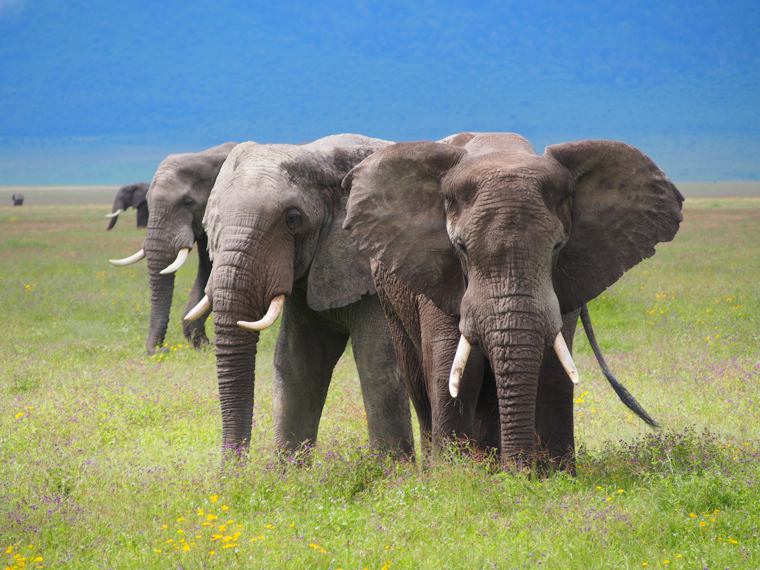
- Elephant — the crater's elephant population is predominantly male. Large bulls with impressive tusks are regularly seen. The caldera's size limits the population, and most resident elephants are individuals or small bachelor groups.
- Black Rhinoceros — Ngorongoro Crater holds one of the most significant black rhino populations remaining in East Africa. There are approximately 20–30 individuals in the caldera. Sightings are less certain than lion or elephant, but a full-day visit in the right area regularly produces them. Our guides know the current ranging patterns.
- Buffalo — large herds of Cape buffalo are common throughout the crater floor. Herds of several hundred individuals are regularly seen near the hippo pool area.
- Leopard — leopard are present in the crater but less reliably sighted than lion, given their solitary and cryptic nature. They are most often seen in the forested rim sections and along drainage lines on the crater floor.
Other Wildlife Worth Noting
- Spotted Hyena — the crater has one of the highest hyena densities in Africa. Large clans of 50–70 individuals have been documented. Hyena are often dismissed as scavengers, but they are active hunters and their social structure is remarkably complex.
- Flamingo — the alkaline Lake Magadi on the crater floor attracts lesser and greater flamingos. Numbers vary by season (highest in the dry season) but flocks of thousands are common.
- Hippopotamus — the hippo pool near the Lerai Forest on the western crater floor holds a permanent hippo population. This is one of the most accessible hippo viewing sites in Tanzania.
- Wildebeest and Zebra — resident populations of both species live in the crater year-round, unlike the migratory herds in the Serengeti. These provide reliable predator–prey dynamics throughout the year.
- Golden Jackal — more common in Ngorongoro than almost anywhere else in Africa, due to the high prey availability.
- Cheetah — less reliably sighted than in the Serengeti, but present and occasionally visible on the open floor.
The Maasai in the Conservation Area
The Ngorongoro Conservation Area (NCA) is not a national park — it is a multi-use conservation area where the Maasai community has lived alongside wildlife for centuries. Maasai are permitted to graze cattle in the area (though not inside the crater itself) and maintain their traditional way of life. The NCA model is unusual in East Africa and has been the subject of considerable debate about the balance between conservation and community rights.
Visiting Maasai bomas (villages) near Ngorongoro is a genuine community tourism experience. These are working communities, not staged performances, and visits are arranged through community-approved programmes. We can organise this as part of your itinerary.
Practical Information: Your Crater Descent
Access and Rules
All crater visits require a licensed guide-driver in a 4x4 vehicle. You cannot drive yourself into the crater. Access is through two main descent roads and vehicles must be out of the crater by a fixed time (currently 6pm). Rangers patrol the crater floor and enforce the rules strictly — do not exit your vehicle except at designated picnic sites.
The number of vehicles allowed in the crater daily is capped. During peak season (July–October), book your crater descent accommodation in advance — crater rim lodges fill quickly and late arrivals may find themselves descending on a different day than planned.
When to Visit
The crater can be visited year-round, but conditions vary:
- Dry season (June–October) — best overall. Short grass makes wildlife more visible. Flamingo numbers peak at Lake Magadi. Roads on the crater floor are dry and accessible. Coolest temperatures at the rim (can be cold at night — below 10C).
- Short dry season (January–February) — excellent. Short grass, good visibility, and fewer tourists than June–October.
- Wet season (March–May, November–December) — crater floor roads can become very muddy and some areas are inaccessible. However, the crater is greener and more scenic, and wildlife remains present throughout the year. Fewer visitors mean a more exclusive experience.
What a Full Day in the Crater Looks Like
A full crater descent departs the rim by 7–8am to catch the morning predator activity. You spend 6–7 hours on the crater floor, breaking for a packed lunch at one of the designated picnic sites (the hippo pool area is most popular). The afternoon shift is quieter but productive — predator activity picks up again from about 4pm. You ascend to the rim by 6pm.
A half-day descent (arriving mid-morning, ascending by early afternoon) is common for travelers on combined safari itineraries, but a full day produces significantly better wildlife encounters. If you have the time, use it.
Crater Rim Accommodation
Staying on the crater rim rather than driving up and back from Karatu in the valley is strongly recommended. The rim is at 2,300m — cooler than the valley — and waking up above the clouds with the caldera below is an experience that justifies the premium. Rim lodges range from comfortable mid-range camps to luxury properties with private decks overlooking the crater. We book crater rim accommodation as part of all our northern circuit safari packages.
Combining Ngorongoro with the Serengeti
The natural route combination is Serengeti → Ngorongoro (or reverse). The drive between the Serengeti's Naabi Hill Gate and Ngorongoro's Lodoare Gate is 2–3 hours. Most travelers spend 2–4 nights in the Serengeti and 1 night on the Ngorongoro rim, descending the crater on the final morning before driving back to Arusha or Moshi.
We include a Ngorongoro Crater descent in all our 4-day and longer northern Tanzania safari packages. See our 5-Day Serengeti, Ngorongoro & Tarangire Safari for the most popular combination.
Plan Your Ngorongoro Visit
Our Moshi-based team handles all Ngorongoro Conservation Area logistics — permits, crater descent timing, rim accommodation, and guide-driver booking. Contact us for a custom northern circuit itinerary.