Kilimanjaro has six main climbing routes — each with a different approach, acclimatization profile, scenery, and price. The right route depends on your budget, available days, fitness level, and how much you value success rate vs cost vs scenery.
This guide is written by our Moshi-based operations team who have guided climbers on all six routes since 2012. The success rates, camp elevations, and route characteristics reflect our actual operational data — not averages compiled from third-party sources.
At a Glance: All 6 Routes Compared
| Route | Days | Difficulty | Summit Rate | Price (Private) | Accom. | Crowds | |
|---|---|---|---|---|---|---|---|
| Machame Route
Whiskey Route |
7 | ●●●●● Moderate–Challenging | 85–90% | $2,300 from / person |
Camping | ●●●●● Moderate–High | View |
| Lemosho Route
Western Breach approach |
8 | ●●●●● Moderate–Challenging | 88–93% | $2,800 from / person |
Camping | ●●●●● Low–Moderate | View |
| Marangu Route
Coca-Cola Route |
6 | ●●●●● Moderate | 70–75% | $1,900 from / person |
Permanent huts | ●●●●● Moderate | View |
| Rongai Route
Northern approach |
6–7 | ●●●●● Moderate | 75–84% | $1,950 from / person |
Camping | ●●●●● Low | View |
| Northern Circuit
Full mountain traverse |
9 | ●●●●● Moderate–Challenging | 90–95% | $3,200 from / person |
Camping | ●●●●● Very Low | View |
| Umbwe Route
Direct southern approach |
6 | ●●●●● Challenging | 65–72% | $1,800 from / person |
Camping | ●●●●● Very Low | View |
Detailed Route Profiles
Machame Route (Whiskey Route)
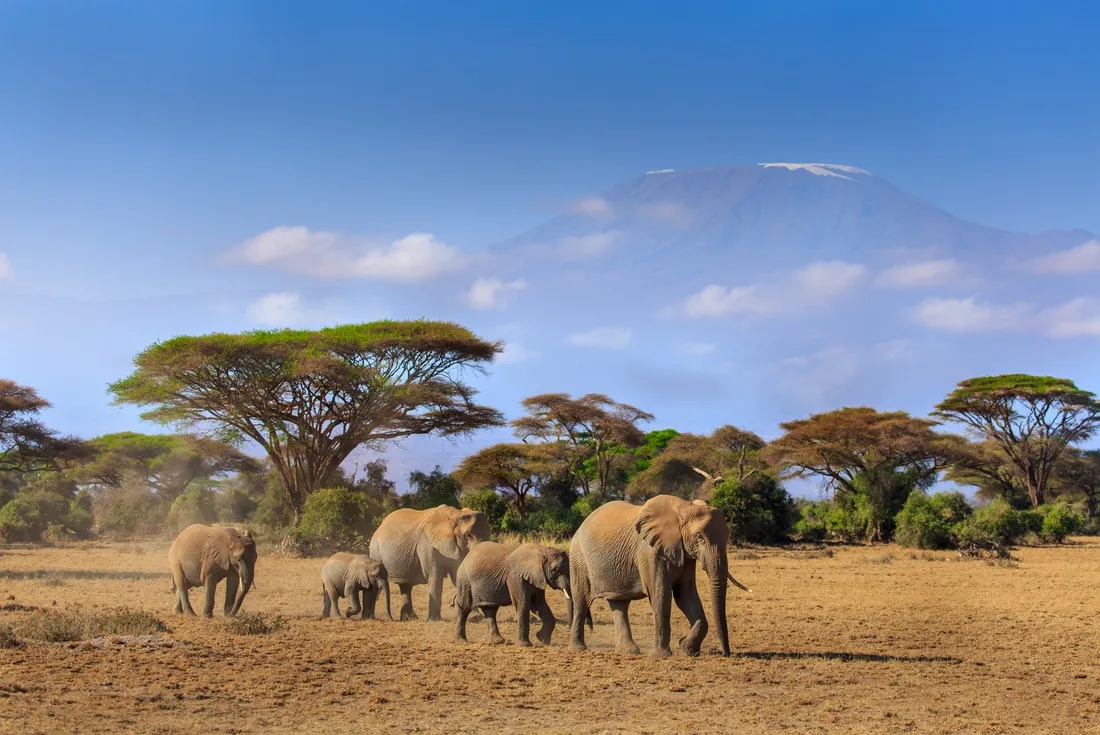
The Machame Route is the most popular route on Kilimanjaro, and for good reason. Its 7-day profile builds in a "climb high, sleep low" acclimatization day that meaningfully improves summit chances over shorter options. The route traverses five ecological zones from dense rainforest to arctic summit plateau, making it one of the most visually varied paths on the mountain.
Best For
First-time Kilimanjaro climbers who want the best balance of success rate, scenery, and cost. Also suited to groups of 2–6 who want the full Kilimanjaro experience without committing to 8–9 days.
May Not Suit
Travelers specifically seeking a quiet, uncrowded route — Machame is the busiest route on the mountain. Also not ideal for those who want hut accommodation.
Camps
- Machame Camp (2,835m)
- Shira Camp (3,847m)
- Barranco Camp (3,976m)
- Karanga Camp (3,995m)
- Barafu Camp (4,673m)
Highlight
The Barranco Wall scramble on Day 4 — a hands-on 300m climb with panoramic views from the top.
Lemosho Route (Western Breach approach)
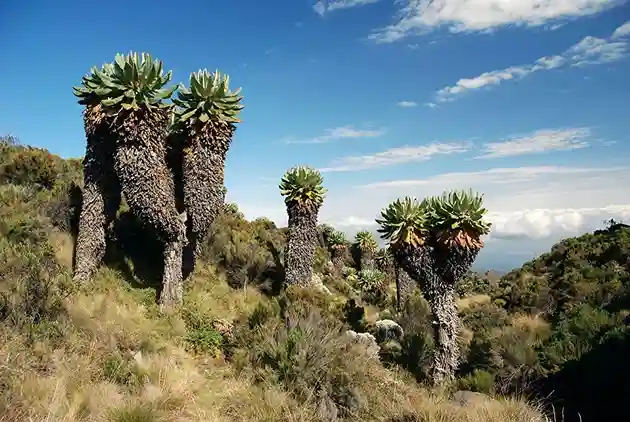
Lemosho is widely considered the finest route on Kilimanjaro. It starts from a remote western trailhead, passing through a quieter forest section with more wildlife before joining the Machame route at Barranco Camp. The 8-day profile adds an extra Shira Plateau night that significantly improves acclimatization — and our summit rates reflect it.
Best For
Travelers who want the highest summit success rate combined with excellent scenery and relatively quiet early sections. Ideal for those who can afford one extra day compared to Machame.
May Not Suit
Those on a strict budget or schedule — the extra day costs more and requires an additional night away. Not suitable for travelers who need a shorter itinerary.
Camps
- Mti Mkubwa Camp (2,650m)
- Shira 1 Camp (3,500m)
- Shira 2 Camp (3,850m)
- Barranco Camp (3,976m)
- Karanga Camp (3,995m)
- Barafu Camp (4,673m)
Highlight
The quieter forest section in days 1–3 with wildlife including colobus monkeys — significantly less traffic than Machame early days.
Marangu Route (Coca-Cola Route)
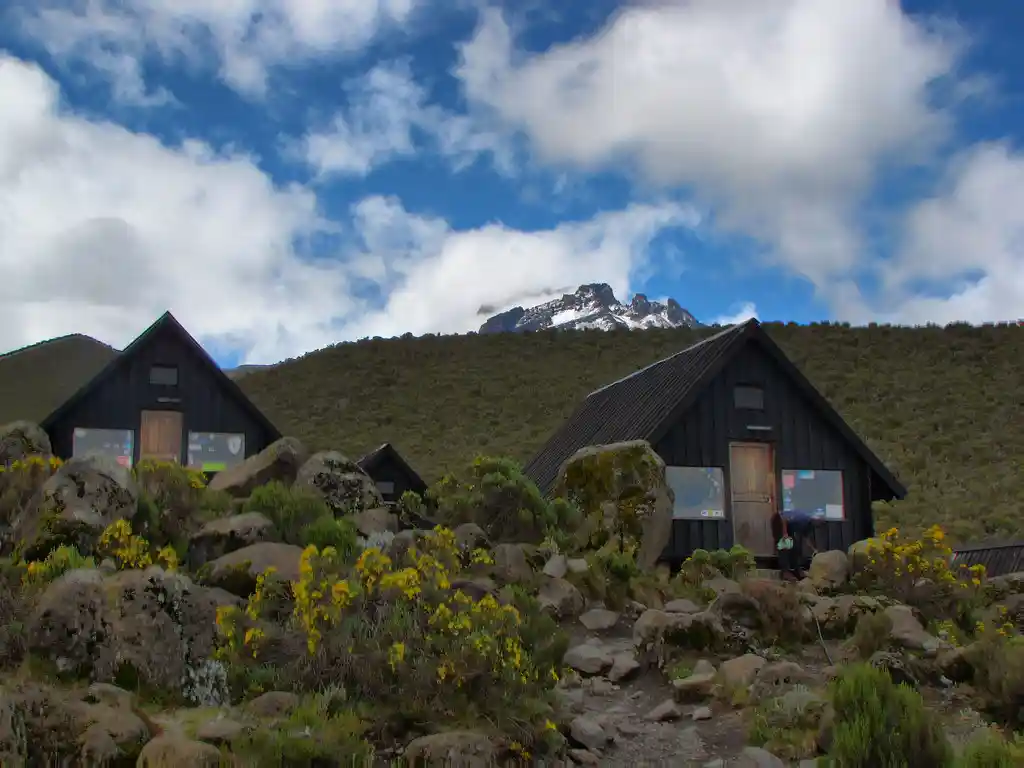
Marangu is the only route with permanent hut accommodation — A-frame dormitory-style huts at Mandara, Horombo, and Kibo. This makes it popular with travelers who dislike camping, but the same-trail ascent and descent with fewer acclimatization days produces a significantly lower summit success rate than Machame or Lemosho.
Best For
Travelers who prefer sleeping in huts over tents, those on a tighter budget, and climbers who accept a lower summit probability in exchange for accommodation comfort.
May Not Suit
Anyone prioritizing summit success — the 70–75% rate is well below Machame or Lemosho. Also not ideal for those who want scenic variety, as the route goes up and down the same trail.
Camps
- Mandara Hut (2,720m)
- Horombo Hut (3,720m)
- Kibo Hut (4,703m)
Highlight
The only route with permanent hut accommodation — no camping or tent setup. Dormitory bunks at three well-maintained huts.
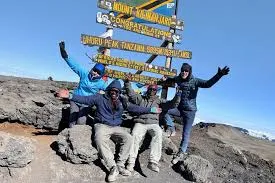
Rongai Route (Northern approach)
Rongai is the only route that starts on Kilimanjaro's northern (Kenyan) side. The northern landscape is drier and more open than the southern approaches — fewer other trekkers in the first three days and a different ecological character. The 7-day version improves acclimatization with an extra night at Kikelewa Camp.
Best For
Travelers who want a quiet, uncrowded experience. Also good during April–May when the northern slope sees less rain than southern routes. Solo climbers who prefer less trail traffic.
May Not Suit
Those prioritizing summit success above all else — Lemosho or Northern Circuit have higher rates. Not ideal for those who want the most scenic route.
Camps
- First Cave Camp (2,600m)
- Second Cave Camp (3,450m)
- Kikelewa Camp (3,630m)
- Mawenzi Tarn Camp (4,330m)
- Kibo Hut (4,703m)
Highlight
The Mawenzi Tarn at 4,330m — a remote alpine lake below the dramatic Mawenzi rock towers, visited by very few trekkers.
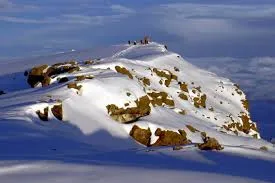
Northern Circuit (Full mountain traverse)
The Northern Circuit is Kilimanjaro's longest and most comprehensive route — the only one that circles the entire mountain. Starting from Lemosho's western trailhead, it diverges north at Lava Tower and spends three days traversing the remote northern face before approaching the summit from the east. The 9-day profile produces our highest summit success rate.
Best For
Experienced hikers who want the most complete Kilimanjaro experience, the highest summit rate, and access to remote northern terrain that almost no other trekkers visit. Travelers with 9 days available and the budget for the longest itinerary.
May Not Suit
Budget travelers — 9 days is the most expensive option. Those with only 6–7 days available. Anyone who has never done multi-day hiking at altitude before.
Camps
- Mti Mkubwa (2,650m)
- Shira 1 (3,500m)
- Shira 2 (3,850m)
- Third Cave (3,800m)
- Moir Hut Area (4,200m)
- Outward Bound (4,050m)
- Barafu (4,673m)
Highlight
Three days on the remote northern face — terrain visited by almost no other route, with views of the northern glaciers and Kenya's Amboseli plains far below.
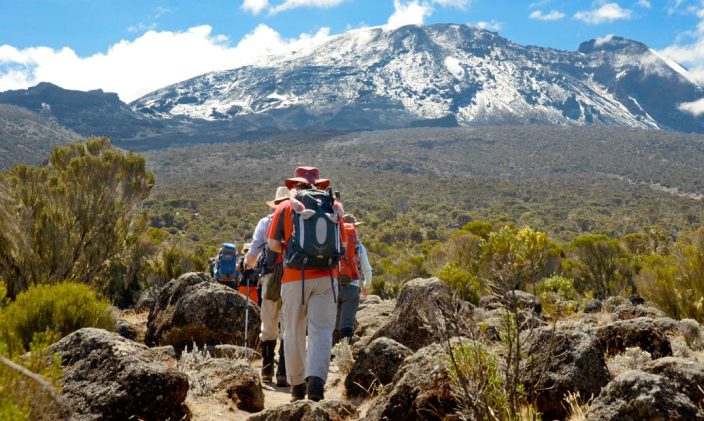
Umbwe Route (Direct southern approach)
Umbwe is Kilimanjaro's most direct and steepest route — a narrow ridge through dense forest that gains altitude faster than any other approach. The compressed timeline means less acclimatization, which directly reduces summit success rates. It is recommended only for experienced mountain trekkers who specifically want the challenge and solitude.
Best For
Experienced mountain hikers who have done multi-day trekking at altitude above 3,500m and are seeking a challenge and solitude rather than the best summit rate.
May Not Suit
First-time Kilimanjaro climbers. Anyone whose primary goal is reaching Uhuru Peak — the 65–72% success rate is well below any other route. Those who have not done significant altitude trekking before.
Camps
- Cave Camp (2,940m)
- Barranco Camp (3,976m — joins Machame)
- Karanga (3,995m)
- Barafu (4,673m)
Highlight
The steep, narrow forest ridge in Days 1–2 — among the most dramatic and solitary sections of any Kilimanjaro route. Very few other trekkers.
How to Choose Your Kilimanjaro Route
If summit success is your main goal
Choose the 9-day Northern Circuit (90–95%) or 8-day Lemosho (88–93%). The extra days cost more but directly improve your chances. Avoid choosing a shorter route to save money if you are going to be disappointed by not reaching the top.
If budget is your main constraint
Group joining on the 7-day Machame is the best value for summit success. At roughly $1,600 per person, you get the same guides, the same route, and the same 85–90% success rate as a private climb at a shared cost.
If scenery is important to you
Machame and Lemosho both traverse five ecological zones with genuine landscape variety. The Shira Plateau on Lemosho is one of the most striking high-altitude landscapes in Africa. Northern Circuit adds three days of remote northern face terrain that no other route covers.
If you dislike crowds
Rongai in the early days, or the Northern Circuit's three northern-face days, see almost no other trekkers. Umbwe is also very quiet. Above Barafu Camp on any summit night, all routes converge and you will see headlamps in every direction.
If you prefer huts over tents
Marangu is the only route with permanent hut accommodation (A-frame dormitory huts at three camps). If sleeping in a structure rather than a tent is important to you, Marangu is your only option. Accept the lower 70–75% summit rate as the trade-off.
If you want the hardest challenge
Umbwe is the steepest and most direct route. It is not harder in terms of technical difficulty — there are no ropes or scrambling beyond the forest ridge — but the rapid altitude gain makes it physiologically more demanding and produces the lowest summit rate.
Frequently Asked Questions
All Routes
Our Recommendation
For most travelers, the 7-day Machame (private) or 8-day Lemosho delivers the best balance of success rate, scenery, and cost.
For maximum success rate: choose the Northern Circuit.
Get a Free QuoteHave a question about which route suits you?
Ask on WhatsApp