The Serengeti has good game viewing for most of the year — but certain months are substantially better than others, and the "best" month depends on what you specifically want to see. River crossings, calving season, predator density, and seasonal crowds all follow different patterns. This guide breaks it down by month so you can match your travel dates to what matters most to you.
Understanding How the Great Migration Works
The Great Migration is not a single event — it's a continuous, year-round movement of approximately 1.5 million wildebeest (plus 200,000 zebra and 400,000 gazelle) following rainfall and fresh grass in a roughly clockwise circuit between Tanzania's Serengeti and Kenya's Masai Mara.
The herds don't move on a schedule. Their movement is determined by rainfall — which means the timing shifts somewhat from year to year. What we can describe are the general patterns, based on decades of observation.
Month-by-Month Serengeti Guide
January and February — Calving Season in the South
The southern Serengeti around Ndutu is where to be in January and February. This is calving season — approximately 400,000 wildebeest calves are born in a 3–4 week window starting in late January. The calving draws predators: lion prides, cheetah families, and hyena clans all follow the herds south.
The predator activity during calving is among the most concentrated you'll see anywhere in Africa. Cheetah hunts in the open short-grass plains are almost daily events for a positioned guide. We run this period as one of our top recommendations for guests who specifically want predator encounters.
Weather: generally dry in January, with some rain beginning in February. Roads in the south are accessible. Fewer tourists than peak season.
March to May — The Rains
The long rainy season runs from mid-March through May. The herds are moving northwest through the Western Corridor, and the roads in the southern Serengeti can be deeply muddy. This is our low season, and we're straightforward about it: for most travelers, April and May are not ideal months for a first Serengeti visit.
That said, there are genuine advantages. The landscape is intensely green. Accommodation prices drop significantly. And the Western Corridor — which is harder to reach than the central Serengeti — has excellent game viewing around the Grumeti River where the first crocodile crossings happen. For experienced safari travelers who want a different kind of visit, we sometimes recommend it.
June and July — The Build-Up Begins
By June, the herds are moving north and crossing the central Serengeti. The long rains end, the grass shortens, and game viewing improves quickly. July is when the northern Serengeti starts to come into its own — the herds are approaching the Mara River, the first significant crossings of the season begin, and the central plains are alive with predator activity following the migration.
July is also when accommodation in the northern Serengeti (Kogatende and Lamai areas) fills up. If you're planning a July trip with specific lodges in mind, book well in advance — particularly for camps with river views.
August and September — Peak Crossing Season
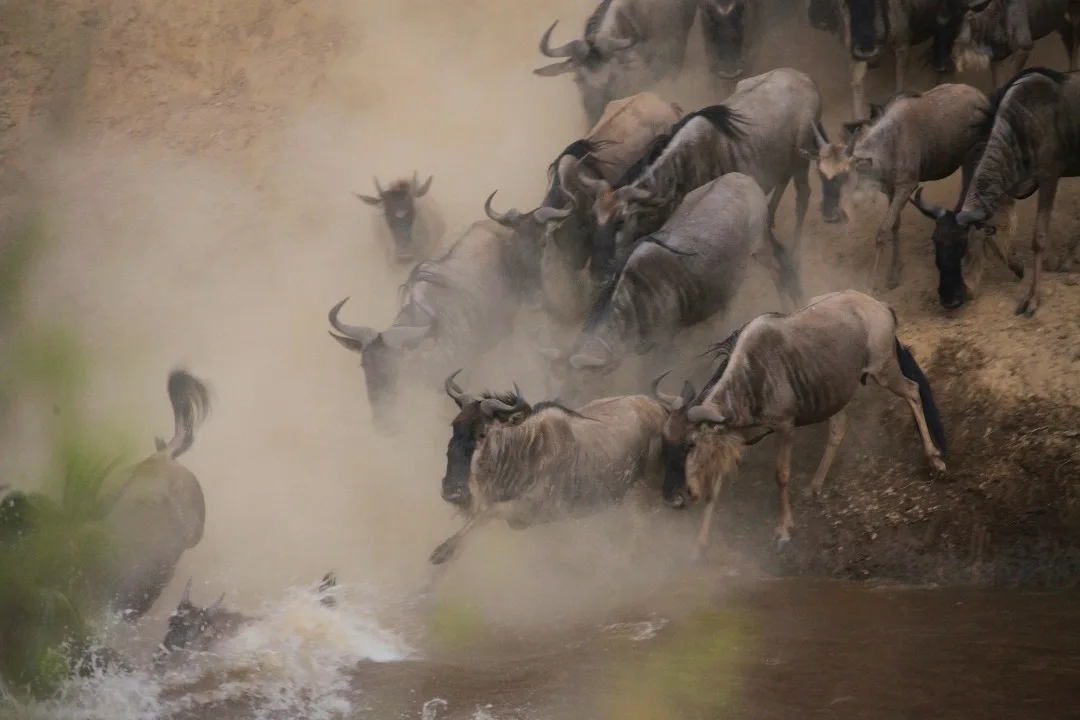
August and September are peak crossing months. The herds are concentrated in the northern Serengeti, and river crossings at the Mara River happen multiple times per week — sometimes multiple times per day. Thousands of wildebeest entering crocodile-filled water in a single crossing is one of the most chaotic, visceral wildlife spectacles in Africa.
We're honest with our guests: crossings are not guaranteed on any given day. The herds hold back along the bank for hours or days before committing. With 5 days in the northern Serengeti during August or September, the probability of seeing at least one crossing is very high. With 2 days, it's considerably lower.
This is peak season for accommodation and prices. Book early — 6 months or more in advance for quality lodges and camps.
October and November — The Return
The herds begin moving south again in October as the short rains start. The northern Serengeti crossings slow; the herds spread across the central and southern sections. November is a transitional month — green, pleasant, with fewer tourists than August-September and reasonable prices.
Some years, the short rains in November are heavy enough to affect road conditions. Other years, they're brief afternoon showers that barely register. It varies.
December — The Shoulder
December sits between the short rains and the beginning of calving season. The herds are in the south and southeast. Game viewing in the central and southern Serengeti is solid. The Christmas-New Year period sees high demand and elevated prices, so book accommodation early if your dates fall there.
Which Season is Right for You
- River crossings — July to October, northern Serengeti (Kogatende/Lamai). Plan for 5+ days if crossings are your primary goal.
- Calving season and predator activity — January to February, southern Serengeti (Ndutu area). Fewer tourists than peak season.
- Best all-round wildlife — June to October (dry season). Short grass, animals concentrated at water sources, predators consistently active.
- Lowest prices and fewest crowds — April to May (long rains). Acceptable for experienced travelers; not recommended for a first visit.
- Best for combining with Zanzibar — July to October (both safari and Zanzibar conditions are good simultaneously).
Practical Planning Notes
The Serengeti is large — 14,763 km². Where you are within it matters as much as when you visit. A guide who knows which zones are producing sightings, and who maintains radio contact with other vehicles, makes a significant difference to what you see in any given day.
Our guide-drivers have an average of 10+ years in Tanzania's northern parks. They know the Serengeti's seasonal patterns, understand animal behavior, and adjust their positioning based on current conditions rather than following a fixed route. That knowledge is what you're paying for when you book a private safari.
See our Serengeti safari packages for specific itinerary options across all seasons, accommodation tiers, and group types.