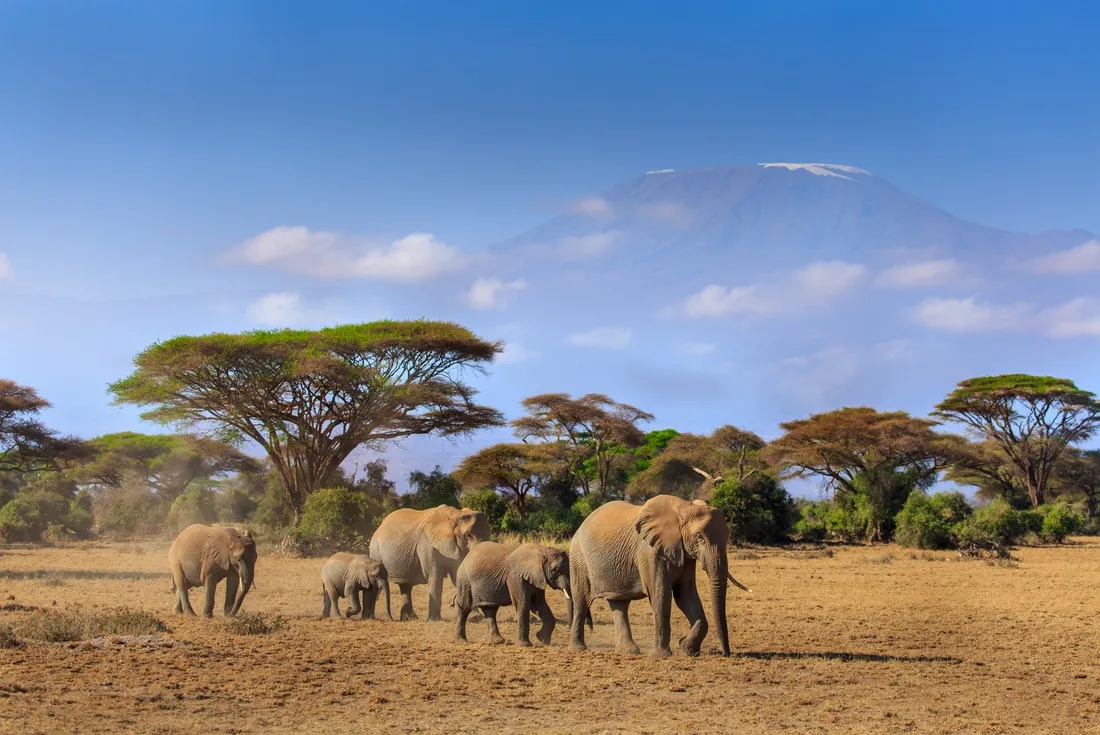
Kilimanjaro is the highest freestanding mountain in the world at 5,895 metres, but it requires no technical climbing skills — no ropes, crampons, or ice axes on any of the standard routes. What it does require is physical preparation, the right gear, adequate acclimatization time, and an understanding of how altitude affects the body. This guide covers what actually matters for a first-time climber.
What Makes Kilimanjaro Different from Other Treks
The challenge on Kilimanjaro is almost entirely altitude, not terrain. The trails are clear, well-maintained, and non-technical. But at 5,895 metres, the air contains roughly half the oxygen available at sea level. Your body needs time to adjust — and the pace at which you ascend determines how well it can do that.
This is why route choice matters more for first-time climbers than fitness level. A fit person who chooses a 6-day Marangu route may struggle on summit night; a moderately fit person who chooses a well-structured 7-day Machame or 8-day Lemosho route often succeeds. The extra days are not padding — they're acclimatization.
How to Train for Kilimanjaro
We recommend starting 3–6 months before your climb. Kilimanjaro doesn't demand elite fitness, but sustained cardiovascular effort over 6–8 hours per day for 7–9 days requires a genuine base.
- Cardio base — running, cycling, swimming, or rowing 3–4 times per week. Build up to 45–60 minutes per session comfortably before your climb.
- Weighted hiking — 4–6 hour hikes with a day pack (8–12 kg) on varied terrain. If you live in a flat area, use a treadmill on incline or repeat staircase circuits. The objective is time on feet with weight, not speed.
- Leg and core strength — squats, lunges, step-ups, and planks. Kilimanjaro's descents put significant load on the knees; building leg strength before the trip reduces post-climb soreness and protects the joints.
- Altitude exposure — if you have access to altitude training facilities, altitude tents, or high terrain (2,000+ metres), use it. It helps, but it's not necessary — many of our clients summit without any prior altitude exposure.
Which Route to Choose
For most first-time climbers, we recommend either the 7-day Machame or 8-day Lemosho route. Both have "climb high, sleep low" acclimatization days built into the itinerary, which meaningfully increases summit success rates compared to shorter options.
The Marangu route is often marketed as the easiest because it has hut accommodation instead of camping — but its 6-day profile has fewer acclimatization days, and our Marangu summit rate (70–75%) is significantly lower than our Machame rate (85–90%). If your goal is to reach Uhuru Peak, Marangu is not the route to choose based on comfort alone.
Read our full Kilimanjaro route comparison for a side-by-side breakdown of all six routes with actual summit rates.
Understanding Altitude Sickness
Acute Mountain Sickness (AMS) affects most climbers to some degree above 3,000 metres. Mild symptoms — headache, fatigue, reduced appetite — are common and don't necessarily mean you should turn back. The body is adjusting.
Our guides monitor your blood oxygen saturation with a pulse oximeter twice daily. A reading consistently below 80% at a given altitude is a signal to slow down or rest. Severe symptoms — confusion, loss of coordination, extreme breathlessness at rest — mean descent immediately.
Diamox (acetazolamide) is a prescription medication that speeds up acclimatization. We recommend consulting your doctor before your climb about whether it's appropriate for you. It doesn't replace adequate acclimatization time — it supplements it.
See our detailed altitude sickness guide for the full breakdown of AMS, HAPE, and HACE, and how we manage them on the mountain.
Essential Gear for a Kilimanjaro Climb
The gear list is specific and matters. The temperature range on Kilimanjaro runs from approximately 25°C in the rainforest at the base to −15 to −20°C on summit night. You need a layering system that covers that entire range.
The most commonly under-specified items we see:
- Sleeping bag — rated to −15°C comfort (not limit) rating. Rental available in Moshi.
- Down jacket — a genuine −10°C rated down layer for summit night. Fleece alone is not enough.
- Waterproof outer shell — fully waterproof (not water-resistant) jacket and trousers. The forest zone is wet.
- Hiking boots — ankle support, waterproof, broken in for at least 3 full hiking days before the climb. New boots are one of the most common preventable problems we see.
- Summit gloves — waterproof outer glove rated to −20°C for summit night, plus liner gloves for hiking days.
Our complete Kilimanjaro packing list covers every item with specific temperature ratings and weight guidance.
What the Climb Actually Feels Like
The first two days on the Machame or Lemosho route are through dense montane rainforest — green, humid, and relatively gentle. By Day 3 you're in moorland above the tree line, with the summit visible for the first time. Days 4 and 5 are alpine desert: sparse, cold at night, increasingly dramatic.
Summit night starts between midnight and 1am from Barafu Camp at 4,673 metres. You climb in darkness for 6 hours, gaining 1,222 metres to Uhuru Peak. This is the hardest part — cold, slow, thin air, and the accumulated fatigue of the preceding days. Our guides set a pace of pole pole (slowly, slowly) that allows steady progress without over-exertion. The pace feels frustratingly slow. It's correct.
Most climbers describe the first view from Stella Point on the crater rim as one of the most affecting moments of their lives — not because of what they see, but because of the effort it took to be there. The extra 45 minutes to Uhuru Peak along the crater rim is one of the easier decisions most people make on the mountain.
Tips That Actually Help
- Drink 3–4 litres of water per day on the mountain. Dehydration compounds altitude sickness.
- Eat at every meal even when your appetite is suppressed. Your body is working hard.
- Don't rush on the first two days because they feel easy. The pole pole pace is protecting your summit chances.
- Bring more hand warmers than you think you'll need for summit night.
- Keep your water bottles inside your jacket on summit night — they will freeze otherwise. Use hard-sided bottles rather than hydration bladder tubes.
- Your summit certificate depends on reaching Stella Point (5,756 metres) at minimum. Uhuru Peak (5,895 metres) requires another 45 minutes along the crater rim. Both are real achievements.
Ready to Start Planning?
We can advise which route and duration suits your fitness level, schedule, and goals. Our Moshi team responds to all inquiries within 2 hours.