What Is Kilimanjaro?
Mount Kilimanjaro is a free-standing stratovolcano in northern Tanzania, rising 5,895 metres (19,341 feet) above sea level at Uhuru Peak. It is the highest point in Africa and one of the Seven Summits. Unlike the other high-altitude peaks on that list, Kilimanjaro requires no technical climbing — no ropes, no crampons, no fixed lines. Climbers ascend via clearly marked trekking routes through five distinct ecological zones: rainforest, heathland, moorland, alpine desert, and the arctic summit.
The mountain has three volcanic cones: Kibo (the highest and most recently active), Mawenzi, and Shira. Kilimanjaro lies entirely within Tanzania National Parks (TANAPA) and requires a licensed operator for all climbs. No independent climbing is permitted.
The Five Ecological Zones
Climbing Kilimanjaro takes you through five completely different environments in a matter of days. Each zone has its own temperature range, vegetation, and wildlife:
| Zone | Elevation | Character |
|---|---|---|
| Rainforest | 800–2,800m | Dense tropical forest. Colobus monkeys, birds, vines. Humid, green, often wet. |
| Heathland | 2,800–3,200m | Open shrubland, heather trees, giant lobelias. Views begin to open. |
| Moorland | 3,200–4,000m | Alpine moorland. Giant groundsels, senecio plants. Very distinctive landscape. |
| Alpine Desert | 4,000–5,000m | Sparse vegetation, loose scree, extreme UV. Feels lunar. |
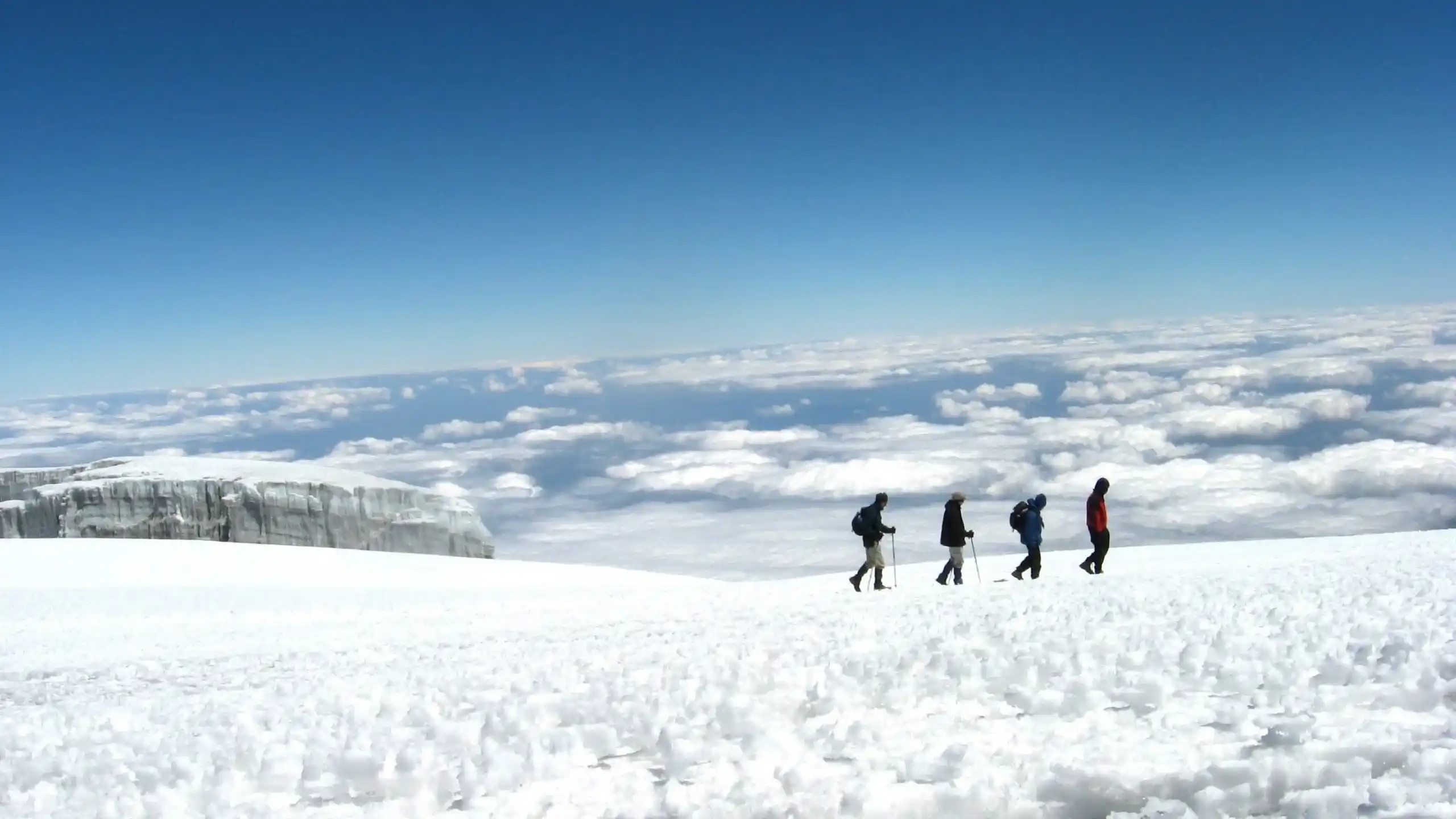
| Arctic Summit | 5,000–5,895m | Snow, glaciers, rock. Sub-zero temperatures even in daylight. |
Kilimanjaro Routes Overview
Six official routes ascend Kilimanjaro. Each has different characteristics in terms of duration, success rate, scenery, and accommodation type. The route you choose has the single largest impact on your summit success rate.
| Route | Duration | Success Rate | Accommodation | Best For |
|---|---|---|---|---|
| Marangu | 5–6 days | 70–75% | Huts throughout | First-timers wanting comfort |
| Machame | 6–7 days | 85–90% | Camping | Best overall experience |
| Lemosho | 7–8 days | 88–93% | Camping | Scenery + success rate |
| Rongai | 6–7 days | 80–85% | Camping | Quiet, northern approach |
| Northern Circuit | 9–10 days | 90%+ | Camping | Maximum acclimatization |
| Umbwe | 5–6 days | 65–70% | Camping | Very fit, experienced hikers only |
For a full side-by-side comparison of all six routes, see our Kilimanjaro route comparison guide. If you are combining Kilimanjaro with a safari and Zanzibar, our 13-Day Tanzania Adventure uses the Marangu Route, with the option to upgrade to Machame.
How Difficult Is Kilimanjaro?
The difficulty of Kilimanjaro is frequently misunderstood in both directions. It is harder than most people expect because of altitude, and easier than many fear because it requires no technical skills. The key physical demands are:
| Factor | Reality |
|---|---|
| Duration | 5–9 consecutive days of hiking, 5–8 hours per day |
| Altitude | Effect unpredictable regardless of fitness level. Affects everyone above 3,000m to varying degrees. |
| Summit night | Midnight start, 6–8 hours ascending in darkness and cold (−15 to −20°C with wind chill) |
| Terrain | Well-marked trails throughout. Rocky sections but no exposed scrambling or vertical climbing. |
| Fitness | Aerobic fitness matters more than strength. Cardio preparation over 3–6 months is the most important factor. |
Physical Preparation
The most common reason climbers do not summit is inadequate physical preparation — particularly insufficient aerobic base and no previous altitude experience. Our recommended minimum preparation:
| Training Type | Frequency | Notes |
|---|---|---|
| Running or cycling | 3–4× per week | Build to 45–60 minutes per session at sustained moderate effort |
| Weighted day hikes | 2× per month minimum | 4–6 hours with a loaded pack (10–12kg). At least 3 before departure. |
| Stair or incline training | Weekly | Simulates the sustained uphill effort of Kilimanjaro days |
| Altitude exposure | If possible | Pre-trip visit to 3,000m+ location. Not essential but beneficial. |
For a detailed 12-week training plan, see our Kilimanjaro training guide.
Altitude and Acclimatization
Altitude sickness (Acute Mountain Sickness — AMS) affects climbers on Kilimanjaro regardless of fitness level. The physiological trigger is the rate of ascent relative to the body's ability to produce red blood cells and adjust blood chemistry. Mild AMS symptoms — headache, fatigue, reduced appetite, disturbed sleep — are normal above 3,000m and do not require descent. Severe AMS (confusion, loss of coordination, breathlessness at rest) requires immediate descent.
Our guides carry pulse oximeters and monitor blood oxygen saturation every morning and evening from Day 2 onward. Supplemental oxygen is carried on summit day. For the full altitude sickness protocol, see our altitude sickness guide and our acclimatization guide.
The principle of climb high, sleep low — gaining altitude during the day and returning to a lower elevation to sleep — is built into the better Kilimanjaro routes (Machame, Lemosho, Northern Circuit) but not into the Marangu. This is one of the key reasons longer routes have higher success rates. Read more in our route comparison.
What Does Kilimanjaro Cost?
The cost of a Kilimanjaro climb depends on route, group size, and accommodation tier. For a complete breakdown of all cost components — park fees, porter ratios, guide fees, and what separates cheap packages from reputable ones — see our Kilimanjaro climb cost guide. Starting prices with Travel Luxuries Adventure begin from $1,900 per person on the 6-day Marangu Route.
What to Pack
Gear selection has a significant effect on summit success. The correct layering system, a sleeping bag with an adequate temperature rating, and a headlamp with spare batteries are non-negotiable. See our complete Kilimanjaro packing list for a full breakdown of every item by category, with temperature ratings and brand-agnostic recommendations. Sleeping bag rental (rated to −15°C comfort) is available at our Moshi office.
How to Book
All Kilimanjaro climbs must be arranged through a TANAPA-licensed operator. Travel Luxuries Adventure has operated from Moshi since 2012. We handle permits, crew, accommodation, meals, and emergency protocols. For a combined Kilimanjaro, safari, and Zanzibar trip, see our 13-Day Tanzania Adventure. For individual Kilimanjaro packages by route, visit our Kilimanjaro packages page.
Our 13-Day Tanzania Adventure combines Kilimanjaro via the Marangu Route with a Serengeti and Ngorongoro safari and four nights in Zanzibar. Free quote within 2 hours.