What Is the Big Five?
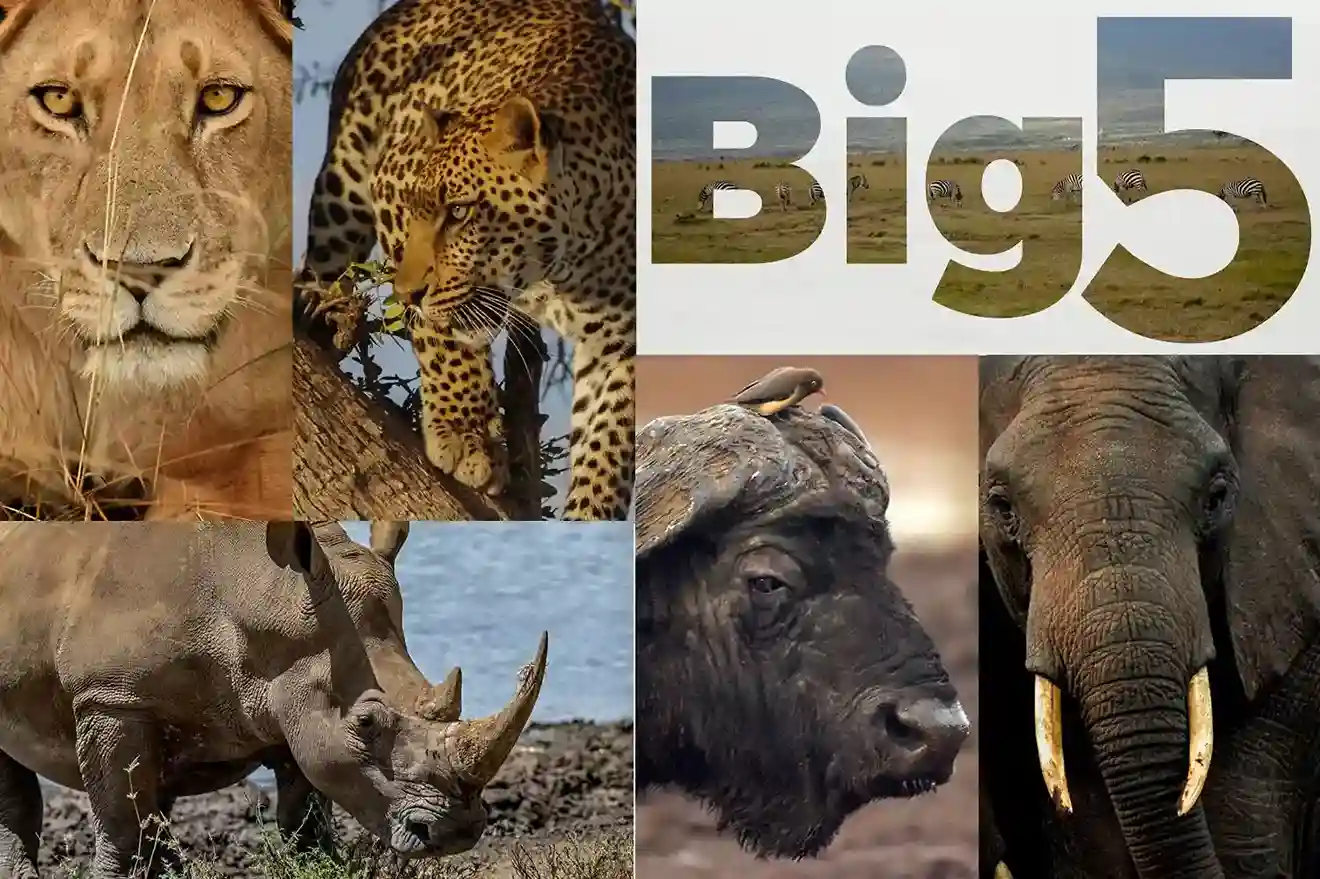
The term "Big Five" was coined by big game hunters to describe the five most dangerous African animals to hunt on foot. Today it refers to the five most sought-after species on a safari: lion, African elephant, leopard, African buffalo, and black (and white) rhinoceros. The term has outlasted its hunting origins because these five species remain among the most impressive and, in some cases, elusive animals you can see in the wild.
Lion — Panthera leo
Tanzania holds approximately 40% of the world's remaining lion population — an estimated 14,000 to 17,000 individuals. The Serengeti is home to approximately 3,000 lions organised in resident prides. Lions are the most reliably spotted of the Big Five — prides rest in the open and are visible from vehicles throughout the day.
| Best Park | Best Zone | Best Season | Notes |
|---|---|---|---|
| Serengeti | Central (Seronera) | Year-round | Resident prides along Seronera River Valley |
| Serengeti | Southern | Jan–Feb | Calving season — lion hunting newborn wildebeest |
| Ngorongoro Crater | Crater floor (all zones) | Year-round | Resident pride; excellent visibility in open caldera |
| Tarangire | Northern woodland | Jun–Oct | Dry season concentrates animals at rivers |
African Elephant — Loxodonta africana
Tanzania has approximately 60,000 African elephants — one of the largest populations on the continent. Elephants are present across all northern circuit parks, but Tarangire National Park has the highest elephant density in the northern circuit — particularly June–October when the dry season concentrates herds at the Tarangire River. The Serengeti's elephant population is smaller than Tarangire's but herds of 20–40 individuals are common.
| Best Park | Best Season | Notes |
|---|---|---|
| Tarangire | Jun–Oct | Largest elephant concentration in northern Tanzania |
| Serengeti | Year-round | Large herds in western corridor and central zones |
| Ngorongoro Crater | Year-round | Resident crater population; excellent close-range viewing |
Leopard — Panthera pardus
Leopard is the most elusive of the Big Five — primarily nocturnal, solitary, and expert at using vegetation for concealment. The Serengeti's riverine zones (particularly the Seronera River Valley) provide the best leopard sighting conditions in the northern circuit. Leopards habitually rest in the branches of fever trees and sausage trees during daylight hours — and once located, provide excellent photography opportunities.
| Best Park | Best Zone | Notes |
|---|---|---|
| Serengeti | Seronera River Valley | Resident leopards. Most reliable area in Tanzania. |
| Ngorongoro Crater | Lerai Forest area | Less frequently seen than in Serengeti. Possible. |
| Tarangire | Southern woodland | Present but more elusive than Serengeti population. |
African Buffalo — Syncerus caffer
Buffalo are the most numerous of the Big Five in Tanzania's northern circuit and among the easiest to find. Herds of 200–500 animals are common in the Serengeti, particularly around permanent water. The Ngorongoro Crater's buffalo population (approximately 4,000 animals) grazes openly on the crater floor and is visible on virtually every crater descent.
Black Rhinoceros — Diceros bicornis
Black rhino is the rarest of the Big Five in Tanzania and the species requiring the most specific positioning to see. The Ngorongoro Crater holds one of the highest-density black rhino populations in East Africa — approximately 25–30 individuals in a defined area of the crater floor. Sightings are common on full crater days but not guaranteed. The Serengeti has a very small rhino population and sightings are rare.
For the best single-day Big Five viewing opportunity, a full crater descent at Ngorongoro is unmatched. Our Ngorongoro guide covers the crater's resident populations in detail.
Tips for Big Five Sightings
| Tip | Why It Matters |
|---|---|
| Position at dawn | Lion, leopard, and cheetah are most active at dawn and dusk — not midday. |
| Stay at sightings | When predators are active, stay. Behaviour develops over minutes and hours, not seconds. |
| Listen to your guide-driver | Radio communication with other vehicles means your guide often knows where animals are before you can see them. |
| Spend more than one game drive per park | A single afternoon drive at a new park is too short. Full days provide dramatically better opportunities. |
| Choose the right zone | Serengeti central for leopard. Ngorongoro for rhino and concentrated lions. Tarangire for elephant. Positioning matters more than luck. |
Our 13-Day Tanzania Adventure covers the Serengeti (lion, leopard, cheetah, elephant) and Ngorongoro Crater (all Big Five including black rhino). Free quote from our Moshi team.