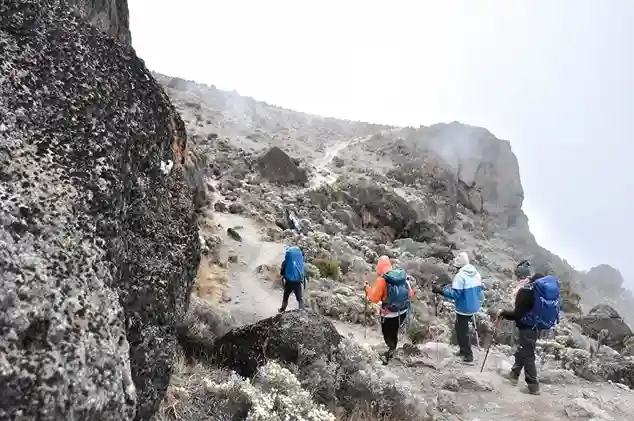
What Porters Do on Kilimanjaro
Porters carry the practical infrastructure of a Kilimanjaro climb. While climbers carry a day pack (5–8kg with water, snacks, layers, and camera), porters transport: the client's main bag (up to 15kg), tents or hut bedding, food and cooking equipment, the kitchen setup, and communal gear. Without porters, a Kilimanjaro climb as we know it would not be possible — they are the logistical backbone of every summit attempt.
A crew of porters for a group of two climbers typically numbers 8–12 people when you include the lead guide, assistant guide, cook, and their support porters. This is not excess — it reflects the genuine labour required to move a self-sufficient camp through five ecological zones over 5–9 days.
Weight Limits — Yours and Theirs
| Bag | Weight Limit | Who Carries It |
|---|---|---|
| Client porter bag | Max 15kg (our policy) | Porter — this is weighed at the gate |
| Client day pack | 5–8kg (your preference) | You — carried throughout the hike |
| Porter total load | Max 20kg (TANAPA regulation) | Porter — includes their personal gear |
| Kitchen and camp gear | Distributed across porter team | Cook and multiple porters |
The bag check at Marangu Gate (or the relevant trailhead) is genuine — overloaded bags are required to be redistributed or left behind. Pack within the 15kg limit. See our packing list for exactly what to include.
Porter Welfare — Our Standards
Porter welfare is a genuine concern on Kilimanjaro. The Kilimanjaro Porters Assistance Project (KPAP) sets industry standards that we adhere to: no porter carries more than 20kg total; porters receive the same quality food as climbers; porters are provided appropriate clothing for altitude conditions; and porters sleep in huts or tents — not in open areas or vehicle storage.
When choosing a Kilimanjaro operator, asking about porter welfare is a reasonable and important question. Operators who cut porter pay, overload bags, or deny porters adequate food and shelter also tend to cut corners on client safety. The two are connected.
How to Tip — Amounts and Timing
| Crew Role | Tip Per Day (USD) | 5-Day Total (Solo Climber) | Notes |
|---|---|---|---|
| Lead guide | $20–25/day | $100–125 | Given directly at descent |
| Assistant guide | $15/day | $75 | Given at descent |
| Cook | $12/day | $60 | Given at descent |
| Porter | $6–8/day | $30–40 per porter | Given collectively in an envelope |
| Total (solo, 5-day Marangu) | — | ~$265–300 total | Adjust proportionally for longer routes |
Tip distribution happens at the trailhead at the end of the descent, before you leave for Moshi. We provide a tip ceremony briefing the night before descent — envelopes, suggested amounts, and a simple Swahili thank-you phrase. Tips are genuinely meaningful for the crew and should be budgeted as a non-optional part of the climb cost.
FAQ — Kilimanjaro Porters
Every TLA Kilimanjaro climb includes a full porter crew, guide team, and safety equipment as standard.