Kilimanjaro Climate Overview
Kilimanjaro has two dry seasons and two wet seasons driven by Tanzania's equatorial climate. The mountain creates its own weather systems, so conditions can change rapidly at altitude regardless of the season below — but the dry seasons offer meaningfully more stable conditions, especially above 4,000m.
The key variables that change by season: trail conditions (mud vs firm), cloud cover (affects summit views and summit photography), temperature (marginal but present), and rainfall on the lower slopes.
Month-by-Month Conditions
| Month | Rating | Conditions |
|---|---|---|
| January | Excellent | First dry season peak. Cold but clear. Excellent summit visibility. Serengeti calving season aligns well. |
| February | Excellent | Driest month of the year. Summit views outstanding. Coldest nights. Serengeti predator activity peak. |
| March | Good | Dry season ending. Some cloud buildup. Still excellent overall. Rain arrives late March on lower slopes. |
| April | Poor | Long rains begin. Rainforest trails muddy and slippery. Higher camps generally dry but approach is difficult. |
| May | Poor | Peak long rains. Not recommended for first climbs. Significant discounts available from operators. |
| June | Good | Rains ending. June can still be transitional — conditions improve through the month. Good value. |
| July | Excellent | Main dry season peak. Clearest skies of the year. Mara River crossings in northern Serengeti begin. |
| August | Excellent | Ideal conditions. Long daylight hours. Summit views exceptional. Peak season — book 4–6 months ahead. |
| September | Excellent | Continuing excellent. River crossings peak. Slightly warmer than July–August. Still clear at summit. |
| October | Good | Dry season ending. Occasional cloud from mid-October. Still recommended. Quieter than peak months. |
| November | Fair | Short rains begin. Unpredictable. Lower slopes wet. Some operators discount. Experienced climbers only. |
| December | Good | Short rains usually end by mid-December. Second half of December is good. Christmas week is expensive. |
The Two Dry Seasons Explained
January to March
The first dry season runs approximately January through mid-March. January and February are the driest months of the year on Kilimanjaro. Summit conditions are excellent — clear skies, firm trails, and cold but stable temperatures. The southern and central Serengeti are in calving season (January–February), making this window ideal for a combined Kilimanjaro, safari, and Zanzibar trip. This window is slightly less crowded than July–September, which means more availability at preferred accommodation.
June to October
The main dry season is the longer and more popular of the two windows. July–September is peak season on both Kilimanjaro and in the northern Serengeti. Summit conditions are outstanding — the clearest skies of the year and the best visibility from Uhuru Peak. The Mara River crossings in the northern Serengeti peak during this window (July–September). Book accommodation 4–6 months in advance for any travel in this period. Prices at quality lodges carry a high-season supplement.
Temperature by Camp Elevation
Kilimanjaro temperatures drop approximately 6–7°C per 1,000m of elevation gain. Here is what to expect at each overnight camp:
| Camp | Elevation | Day Temp | Night Temp | Notes |
|---|---|---|---|---|
| Marangu Gate | 1,830m | 20–25°C | 15–18°C | Tropical. Light layers sufficient. |
| Mandara Hut | 2,720m | 15–20°C | 8–12°C | Cooler. Mid-layer needed at night. |
| Horombo Hut | 3,720m | 10–15°C | 2–6°C | Cold nights. Down jacket required. |
| Kibo Hut | 4,703m | 5–10°C | −5 to 0°C | Very cold. All layers on at dinner. |
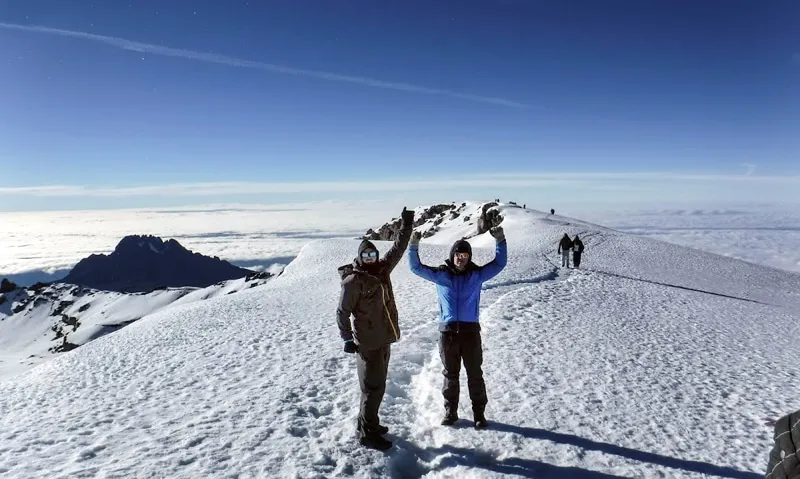
| Uhuru Peak | 5,895m | −5 to −10°C | −15 to −20°C | Wind chill on summit night critical factor. |
Aligning Kilimanjaro with Safari Season
If you are combining Kilimanjaro with a Serengeti safari and Zanzibar — as in our 13-Day Tanzania Adventure — the two dry seasons align well with safari season:
| Your Travel Window | Kilimanjaro Conditions | Serengeti Highlight | Zanzibar Conditions |
|---|---|---|---|
| January–February | Excellent | Calving season — predator activity peak in south Serengeti | Hot and sunny |
| June–October | Excellent | Peak wildlife season. River crossings July–September in north | Best beach season (Jun–Oct) |
| December | Good (late Dec) | Herds moving south | Good — low season ending |
When NOT to Climb
April and May are the long rains — the one period we actively discourage for first-time climbers. The lower rainforest section becomes extremely muddy and slippery. The sustained rainfall affects morale. While the higher camps (above 3,000m) are often dry, the approach is unpleasant. Experienced climbers who want the best value and quietest mountain sometimes climb in May — but it is not the right choice for most travelers.
November is the short rains onset and unpredictable. It can be fine or it can bring persistent cloud and rain on the lower slopes. We rate it as "fair" — workable but not recommended as a first choice if your dates are flexible.
FAQ — Best Time to Climb Kilimanjaro
Ready to plan your Kilimanjaro climb? Our 13-Day Tanzania Adventure combines the climb with a Serengeti safari and Zanzibar. Tell us your travel window and we'll confirm the exact conditions for your dates.