Who Are the Maasai?
The Maasai are a Nilotic people who migrated to northern Tanzania and Kenya over several centuries from the region of present-day South Sudan. Their population is estimated at 1–2 million people across both countries. They identify primarily as cattle herders — cattle represent wealth, social status, and cultural continuity in Maasai society. The traditional Maasai diet was largely cattle-based (milk, meat, and blood on ceremonial occasions).
The Maasai have maintained significant cultural distinctiveness despite modernization pressures, urbanisation, and changing land use patterns. Many Maasai young men today hold professional jobs in Tanzanian cities while maintaining their cultural identity and participating in traditional rites when they return to their communities.
Key Maasai Traditions
| Tradition | Description |
|---|---|
| Enkiama (cattle ownership) | Cattle are central to Maasai social and economic life. Herd size indicates wealth and status. |
| Moran (warrior stage) | Young men enter the moran (warrior) age-grade through circumcision. Traditionally, warriors live separately from the village. |
| Beadwork | Maasai women create elaborate beadwork jewellery with specific colour meanings for social status and life stage. |
| Red shuka | The distinctive red cloth (shuka) is worn by warriors. Elders wear blue or purple. Specific patterns indicate community. |
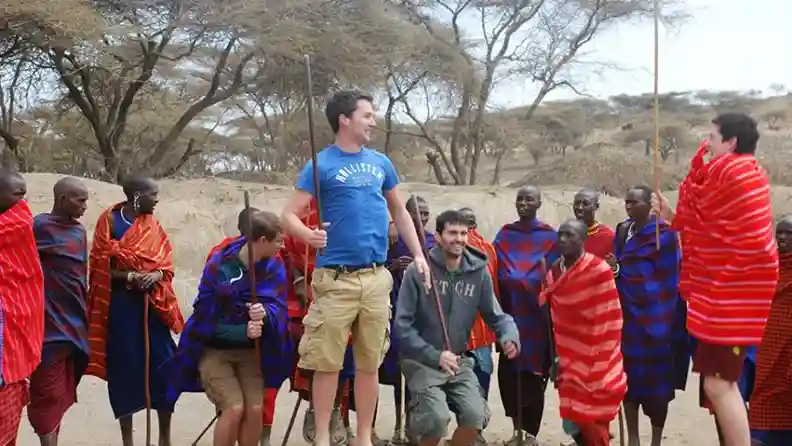
| Jumping ceremony (Adamu) | Warriors compete in vertical jumping to display strength and attract marriage partners. High jumps indicate warrior status. |
| Enkipolos (blood drinking) | Ritual blood consumption from cattle on specific occasions — weddings, circumcision, recovery from illness. |
What to Expect from a Village Visit
A genuine Maasai village visit (arranged through a reputable operator) typically includes: welcome from the village elder; observation or participation in the jumping dance (Adamu); a walk through the enkang (family compound) to see the layout of a traditional homestead; explanation of cattle roles and how the compound is organised around them; opportunity to buy beadwork directly from the women who make it; and a small fee that goes directly to the community.
The entire experience is approximately 1.5–2 hours. Village visits arranged through our operation work with communities we have an established relationship with, where the visit fee is shared transparently.
Responsible Tourism with Maasai Communities
| Do | Don't |
|---|---|
| Ask before photographing individuals | Photograph without asking |
| Buy beadwork directly from the maker at asking price | Bargain aggressively for community-made items |
| Listen to your guide's instructions on etiquette | Enter compounds or areas the elder hasn't indicated |
| Pay the community visit fee directly to the elder | Pay only the operator and assume it reaches the community |
| Treat the experience as a cultural exchange | Treat community members as performance props |
FAQ
Maasai village visits can be arranged as an add-on to any of our northern circuit safari packages. Contact us for details and pricing.